
MERITSUN 30kWh Home Battery Installation Case: A Clean, Scalable Solar Storage Upgrade for Modern Homes
Date: 2026-06-14 Categories: Blog Hits: 349
Residential solar projects are changing. Homeowners no longer look at solar panels as a single energy-saving upgrade. They increasingly want a complete home energy system that can store daytime solar power, support essential loads during grid interruptions, and remain easy for installers to expand or service in the future.
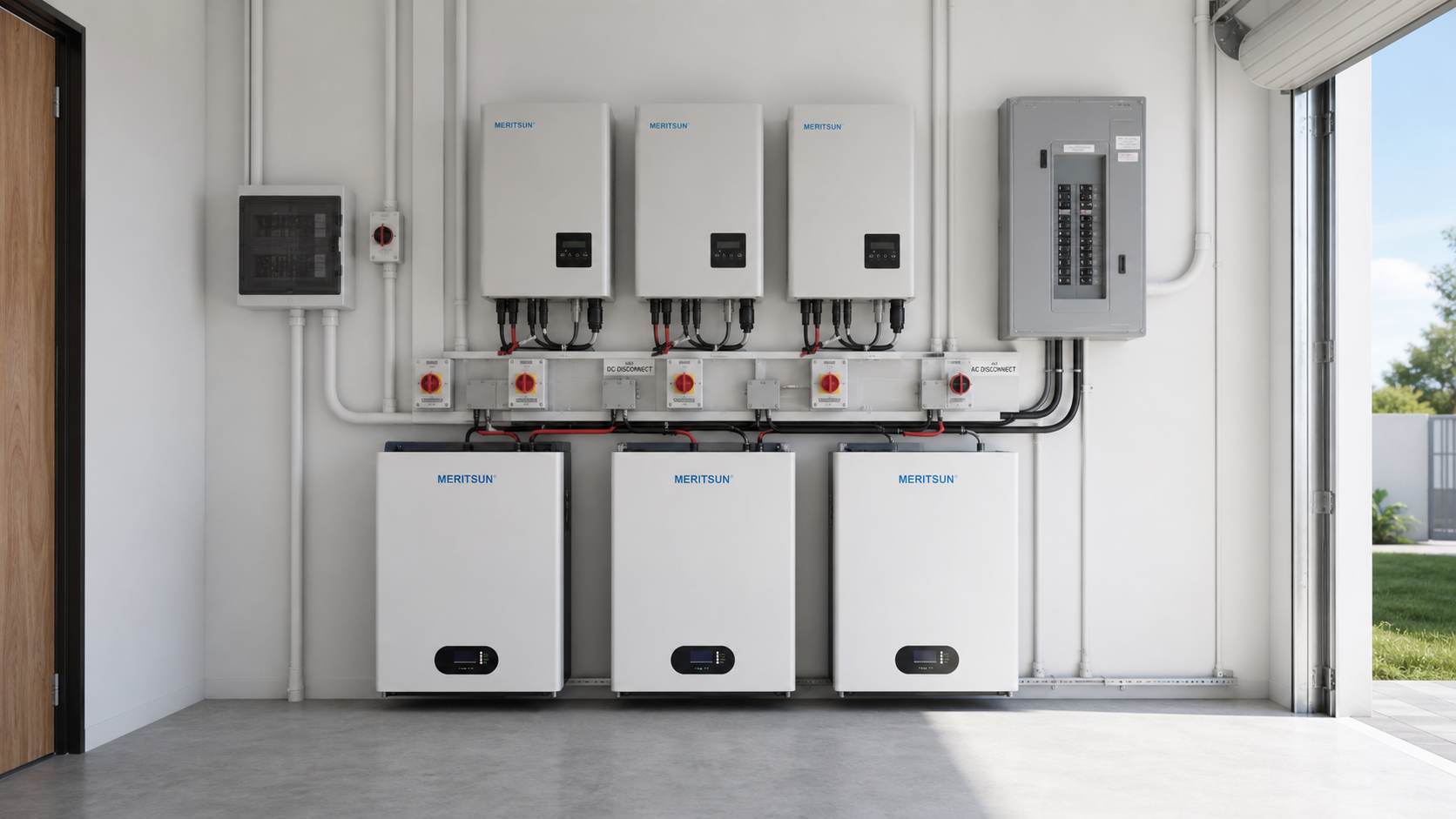
This MERITSUN installation case presents a clean 30kWh home battery system designed for a modern residential property. The system uses three 10kWh wall-mounted battery modules with hybrid inverter equipment, protection devices, disconnect switches, and organized conduit routing. The result is a practical solar-plus-storage solution for whole-home backup planning, higher self-consumption, and long-term energy resilience.
Project Overview
Application: Residential solar energy storage and backup power
Battery configuration: 3 x MERITSUN 10kWh home battery modules
Total storage capacity: 30kWh
System type: Hybrid solar storage system for daily use and outage support
Installation focus: Clean layout, safe protection, easy commissioning, and future scalability
Target users: Homeowners, solar installers, EPC teams, distributors, and residential energy partners
Why a 30kWh Residential Battery System?
A single battery can support basic backup needs, but many modern households require more flexible energy coverage. Air conditioning, refrigeration, lighting, communications equipment, pumps, security systems, home offices, and EV charging habits can all increase electricity demand. A 30kWh configuration gives the homeowner a stronger storage foundation without creating unnecessary installation complexity.
For homes with rooftop solar, battery storage helps shift solar generation from the middle of the day to the evening and night. Instead of exporting excess solar power when household demand is low, the system stores energy for later use. When the grid becomes unstable or utility rates increase during peak periods, stored energy can help reduce dependence on grid electricity according to the system design.
For installers, a modular 3 x 10kWh structure is also easier to plan, transport, mount, and expand. Each module can be positioned in a clear service layout, while the total capacity can be adjusted for different project budgets and load requirements.
Clean Layout: The Foundation of a Better Installation
The most visible feature of this installation is the organized equipment wall. The battery cabinets sit below the inverter and electrical protection area, giving the system a clear top-to-bottom logic: PV and inverter equipment above, storage capacity below, protection and isolation points in between.
This layout supports both installation efficiency and long-term maintenance. Installers can access disconnects, breakers, communication lines, and power cables without working around hidden or tangled wiring. Homeowners can also see that the system has been installed with a professional structure rather than added as an afterthought.
In residential energy storage, appearance is not only about aesthetics. A clean layout helps reduce service time, simplifies inspection, and makes future expansion more predictable. When the electrical room or garage is organized from day one, additional battery modules or accessory upgrades can be planned with less rework.
Installer-Friendly Commissioning
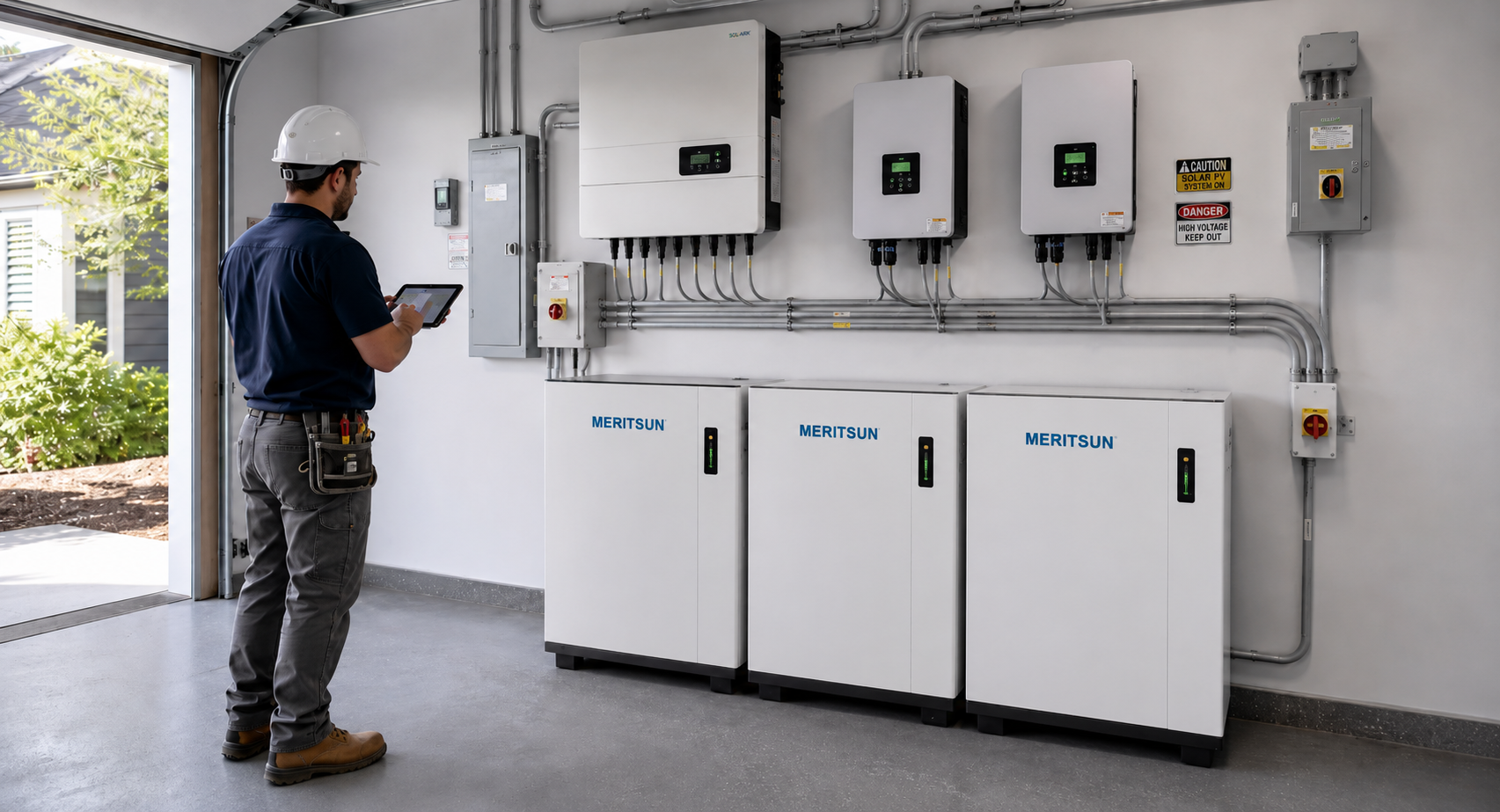
Fast commissioning matters on residential job sites. Homeowners want minimal disruption, while installers need a repeatable process that reduces return visits. In this case, the system layout supports a clear workflow from mounting and wiring to inspection, power-on, system checks, and customer handover.
The MERITSUN home battery solution is designed for practical field deployment. Clear cable routing, accessible battery placement, and visible isolation devices help installers verify each stage of the project. During commissioning, technicians can confirm battery communication, inverter status, PV input, backup load behavior, and grid interaction before handing the system to the homeowner.
For solar installation companies, this kind of repeatable installation experience is important. The easier a system is to install consistently, the easier it becomes to train new teams, standardize project quality, and complete more residential storage projects without increasing service risk.
Designed for Daily Solar Self-Consumption
The main value of a residential energy storage system is not limited to emergency backup. In many homes, the battery works every day. During daylight hours, solar panels generate electricity for immediate household consumption. When solar production exceeds the current load, the battery can store the surplus energy. Later, when the sun goes down or household demand rises, stored energy can help power the home.
This operating pattern helps improve solar self-consumption. It also gives homeowners more control over when and how they use their renewable energy. In markets with time-of-use electricity pricing, storage can help shift grid consumption away from expensive peak periods. In regions with grid instability, storage can support selected loads during outages or voltage events, depending on the backup design.
A 30kWh storage system gives the homeowner more flexibility than a smaller starter configuration. It can support longer evening use, provide stronger backup reserve, and allow the installer to design around a wider range of household load profiles.
Residential Storage That Fits the Home
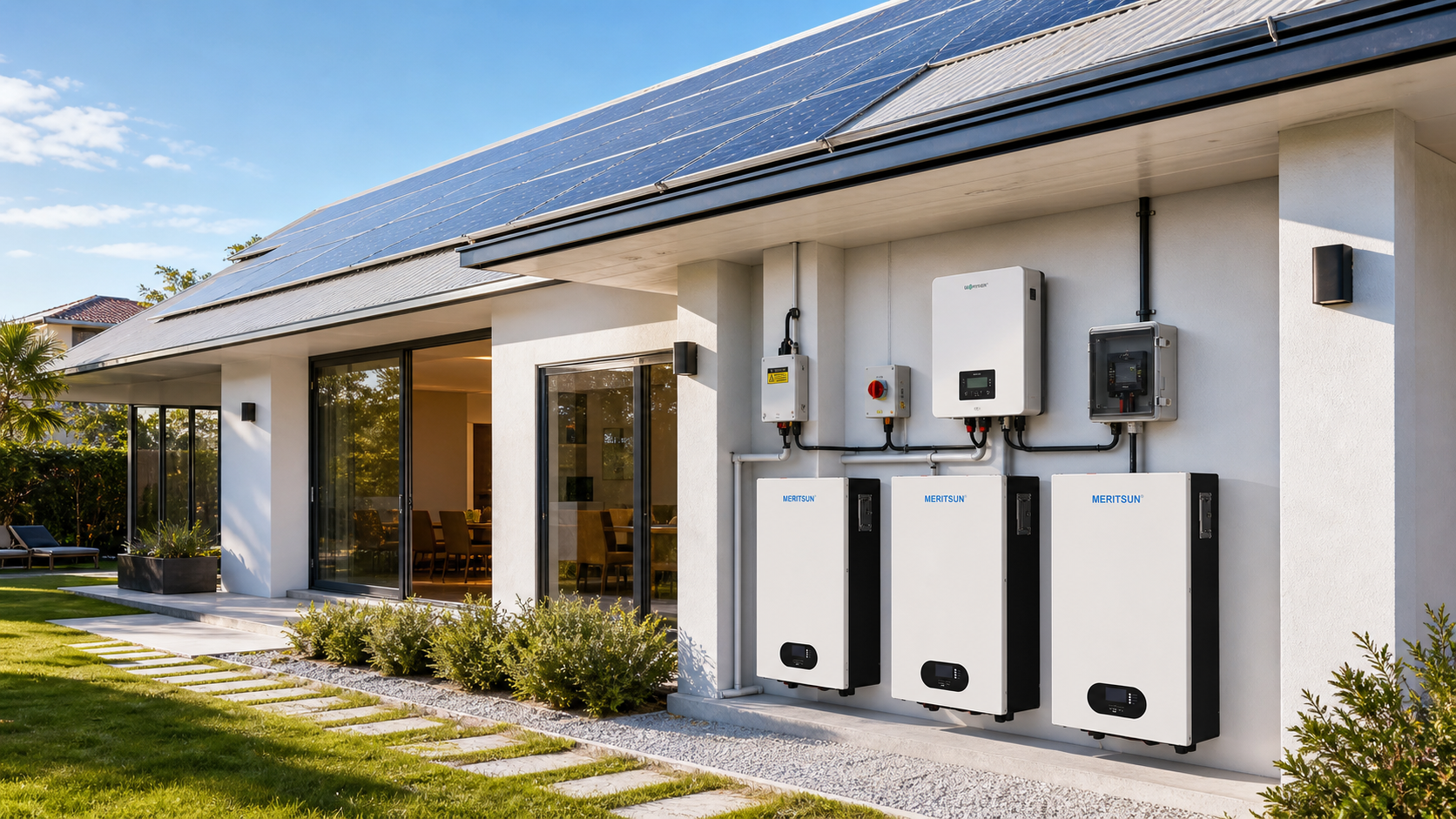
Home energy storage equipment must fit into real residential spaces. Some projects use a garage or utility room. Others place the equipment on an exterior wall under a covered area, subject to local electrical codes and site conditions. In both cases, the system must be compact, accessible, and visually acceptable for the homeowner.
The MERITSUN 10kWh battery format gives installers practical options for layout planning. Modules can be arranged to match the available wall space, while the clean cabinet design supports a professional finish. This is especially valuable for premium homes, solar retrofits, and projects where the homeowner wants energy independence without compromising the appearance of the property.
For distributors and EPC partners, this creates a more marketable solution. A storage system that looks organized and modern is easier to present in proposals, easier to photograph after completion, and easier for homeowners to understand during the sales process.
Safety and Serviceability Built Into the Layout
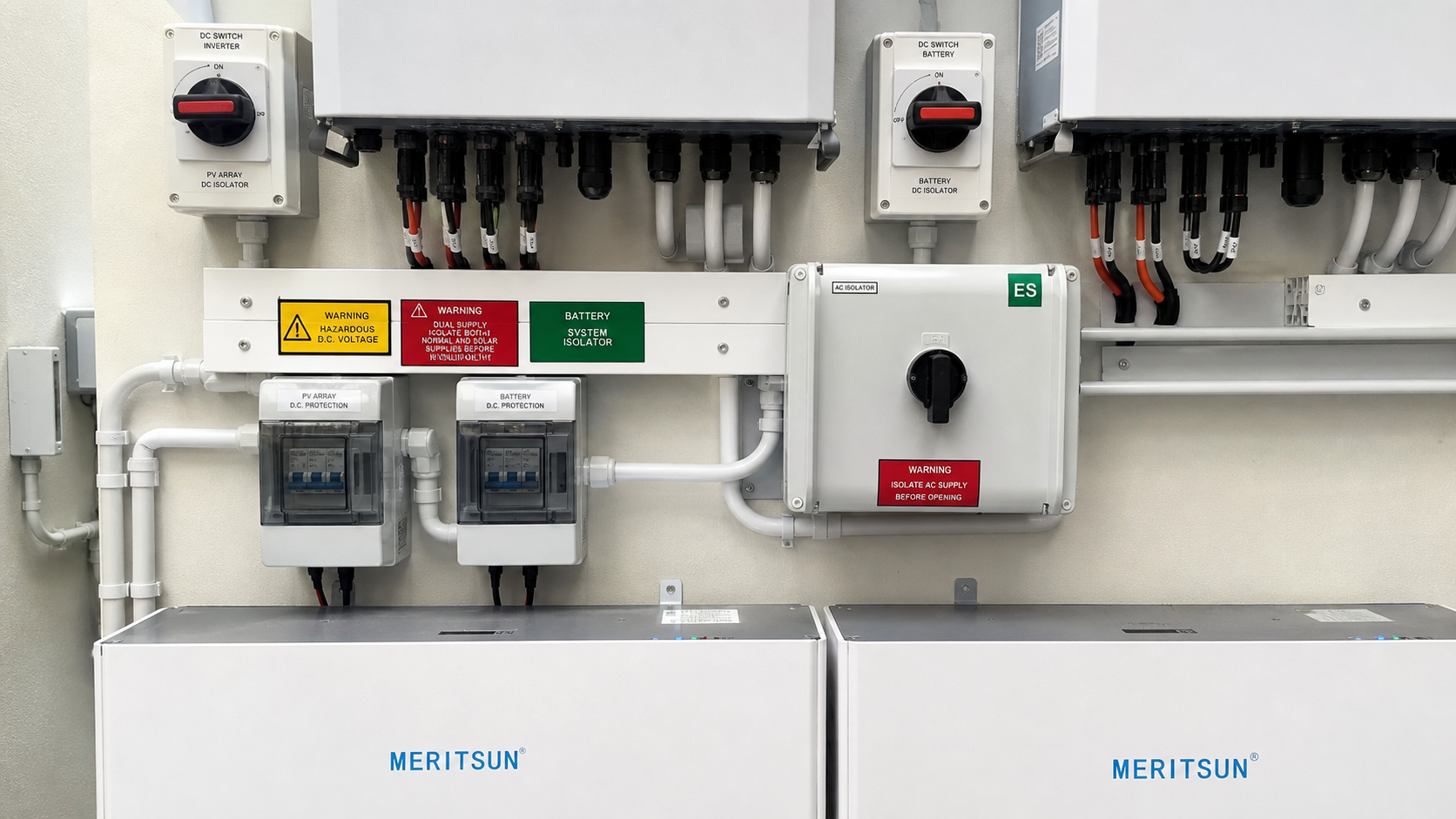
Residential storage projects need clear protection design. Disconnect switches, PV isolation, battery isolation, protection devices, labeling, and cable management all contribute to a safer and more serviceable installation. A battery system should be easy to shut down, inspect, and maintain when required.
In this case, the installation emphasizes visible disconnect points and structured conduit runs. These details help installers and service technicians identify the system sections quickly. They also support a cleaner inspection process and reduce the chance of confusion during future maintenance.
Serviceability is often overlooked during the sales stage, but it becomes critical over the system lifetime. A storage project may need firmware checks, component inspection, load adjustments, expansion, or inverter-side service. A clean installation layout makes those tasks more efficient and reduces disruption for the homeowner.
Scalable for Future Energy Needs
Residential electricity demand is increasing. More households are adding heat pumps, EV chargers, electric cooking, pool systems, home offices, and smart home devices. A storage system installed today should not limit the homeowner tomorrow.
The modular structure of MERITSUN home batteries allows installers to design for current demand while leaving room for future expansion. A 30kWh system can serve as a strong starting point for homes that need meaningful backup and higher solar utilization. If the homeowner's energy demand grows, the installer can evaluate additional capacity based on the inverter design, wiring plan, battery compatibility, and local code requirements.
This scalability is important for solar professionals. It gives sales teams a clear upgrade path, helps distributors support multiple project sizes with a consistent product family, and allows EPCs to standardize training across residential storage deployments.
What Installers Can Learn From This Case
This installation highlights several practical lessons for residential solar storage projects:
Plan the equipment wall before installation. A clear layout reduces wiring complexity and improves the final appearance.
Keep service access visible. Disconnects, protection devices, and cable routes should be easy to identify.
Match capacity to real household demand. A 30kWh system is suitable for homes that need stronger backup reserve and better solar shifting.
Use modular batteries for flexibility. Modular design supports easier transport, installation, and future expansion.
Document the finished system. Clean installation photos help installers build trust with future customers and demonstrate project quality.
MERITSUN Value for Residential Solar Partners
For installers and distributors, battery storage is becoming a key part of residential solar growth. Customers want more than panels. They want control, backup capability, lower grid dependence, and a system that can support future energy habits.
MERITSUN supports this shift with flexible lithium battery solutions for residential, commercial, off-grid, and hybrid applications. The 10kWh home battery module provides a practical building block for systems such as this 30kWh residential installation. It gives solar professionals a solution that can be adapted to different homes, different backup needs, and different regional market requirements.
By combining modular capacity, installer-friendly wiring, clean cabinet design, and scalable project planning, MERITSUN helps partners deliver residential storage systems that are easier to install, easier to explain, and easier to expand.
Conclusion: A Practical Path to Home Energy Independence
This 30kWh MERITSUN home battery installation demonstrates what modern residential energy storage should deliver: clean integration, practical backup capability, daily solar self-consumption, serviceable wiring, and room for future expansion.
For homeowners, the result is a more resilient energy system. For installers, it is a repeatable project model that supports efficient deployment and professional presentation. For distributors and energy partners, it is a clear example of how modular battery storage can meet the next generation of residential solar demand.
Looking for a scalable battery solution for your next residential solar storage project? Contact MERITSUN to learn more about 10kWh home battery modules, hybrid energy storage configurations, and partner support for global solar installers.