
MERITSUN 40kWh Ultra-Thin Home Battery Installation in Cape Town: Solar Backup for a Boutique Guesthouse
Date: 2026-07-17 Categories: Blog Hits: 322
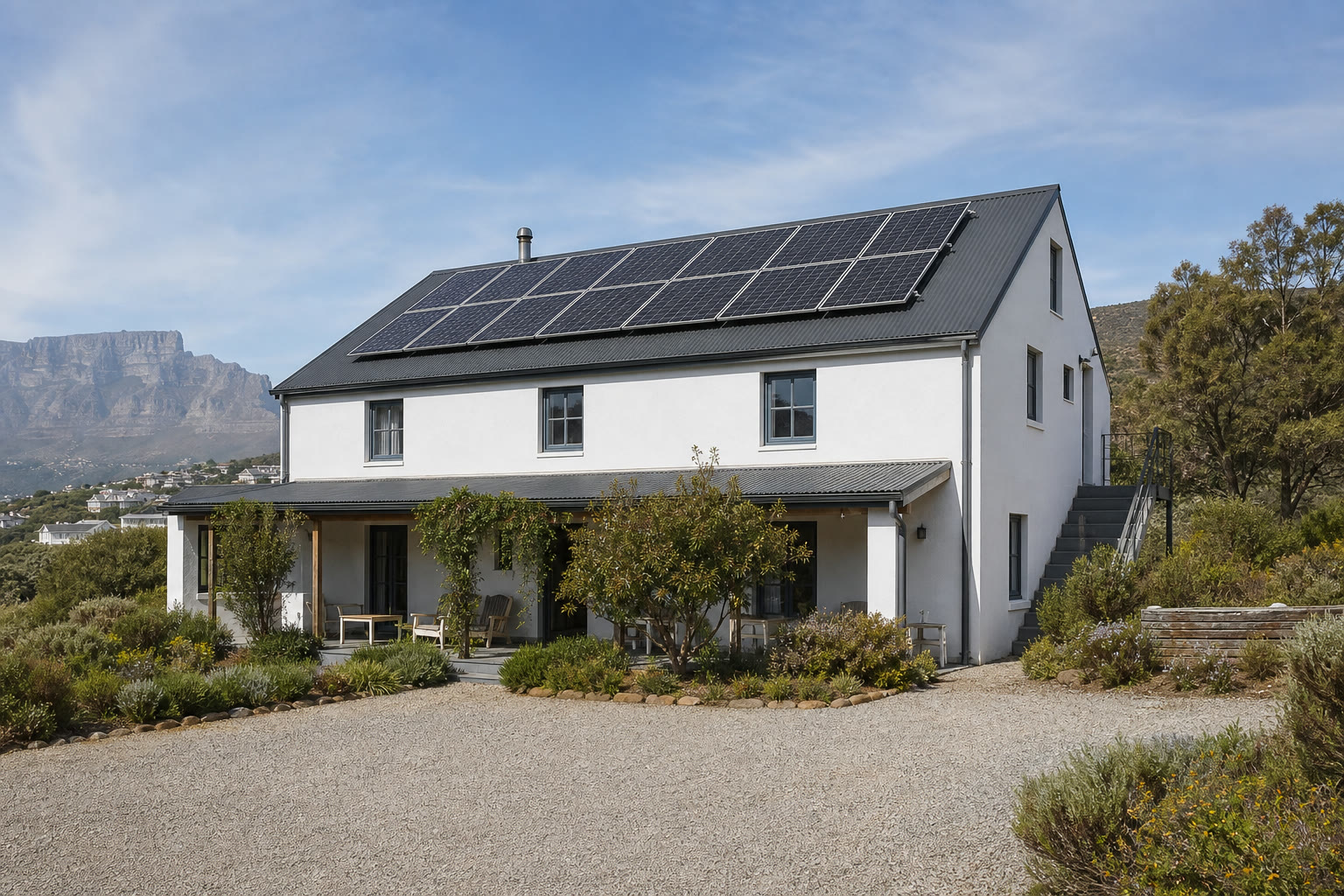
For a boutique guesthouse, electricity is part of the customer experience. Lighting, Wi-Fi, refrigeration, security equipment, booking systems and selected water services must remain available even when the grid is unstable. This installation case presents a 40kWh MERITSUN solar battery system designed for a small guesthouse near Cape Town, South Africa.
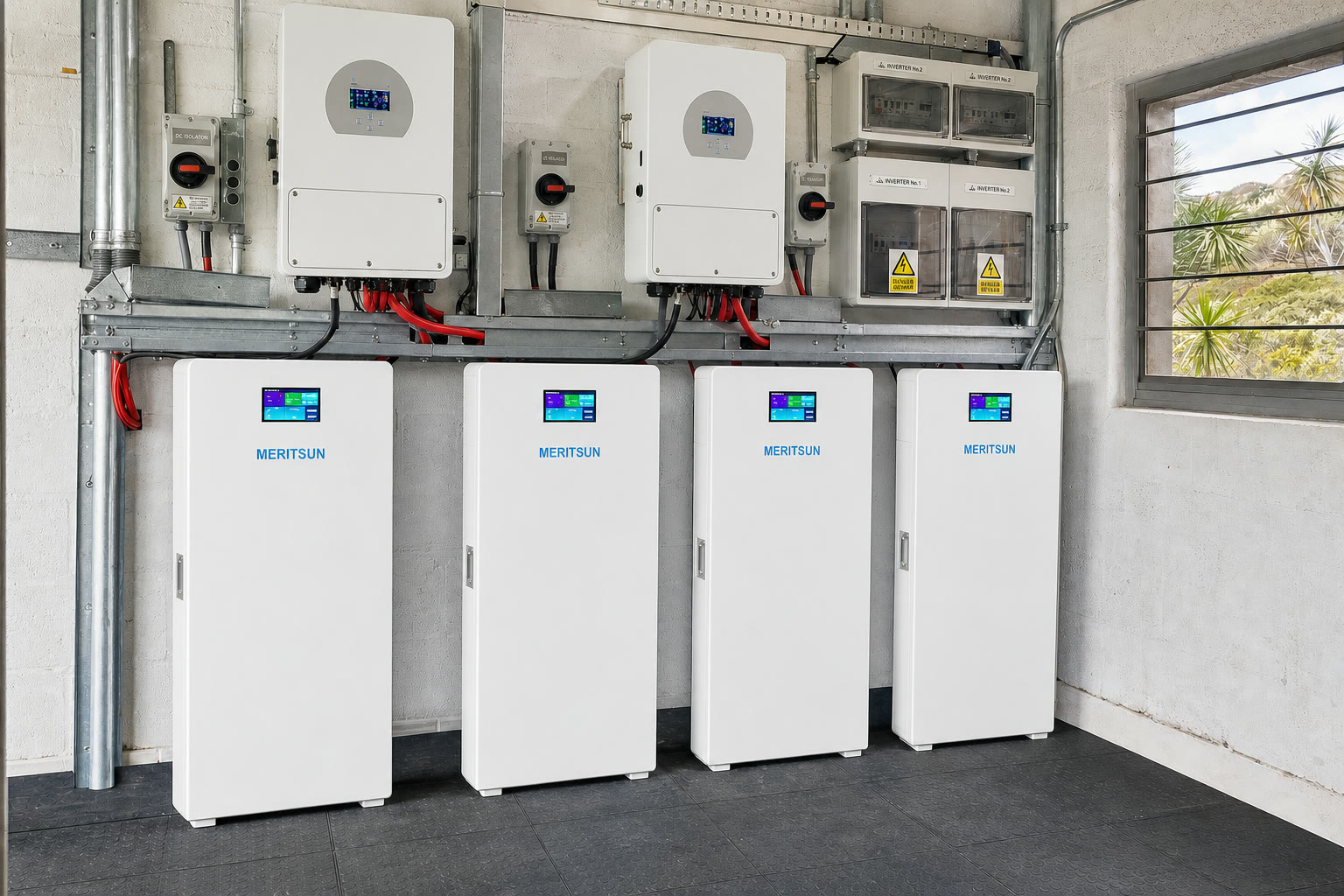
The project uses four ultra-thin 10kWh MERITSUN touchscreen batteries installed in a dedicated service room alongside hybrid inverter and protection equipment. The result is a compact, professional system that supports solar self-consumption and provides a structured backup plan for essential guesthouse loads.
Project Overview
| Location | Cape Town area, South Africa |
| Application | Boutique guesthouse solar self-consumption and essential-load backup |
| Battery | 4 x MERITSUN ultra-thin 10kWh touchscreen LiFePO4 batteries |
| Nominal storage | Approximately 40kWh total |
| Installation area | Indoor utility and electrical service room |
| Inverter arrangement | Parallel hybrid inverter system |
| Key priorities | Compact footprint, local monitoring, service access and future scalability |
The property's daytime demand overlaps well with solar production, but evening guest activity and essential overnight loads require stored energy. The owner therefore needed a battery bank large enough to shift daytime PV generation into the evening while keeping priority circuits available during grid interruptions.
Why an Ultra-Thin 40kWh Battery Bank?
Utility rooms in small hospitality properties are often shared with electrical panels, network equipment and maintenance storage. Floor area and working clearance are limited. The MERITSUN ultra-thin battery design compresses substantial energy capacity into a cabinet with a depth of approximately 10 cm, allowing four units to be installed in one organized row.
- four 10kWh modules create approximately 40kWh of nominal storage;
- the narrow cabinet profile reduces intrusion into the service aisle;
- full-color touchscreens provide immediate local operating information;
- modular construction allows the storage bank to be expanded when future loads justify it;
- LiFePO4 chemistry and the integrated smart BMS support stationary energy-storage use;
- compatibility with multiple hybrid inverter platforms gives installers flexibility at system-design stage.
Capacity selection still depends on measured consumption, the backup-load schedule, solar yield and inverter power. The battery bank was therefore treated as one part of the complete energy system rather than as a stand-alone capacity figure.
An Installation Layout Built for Service Access
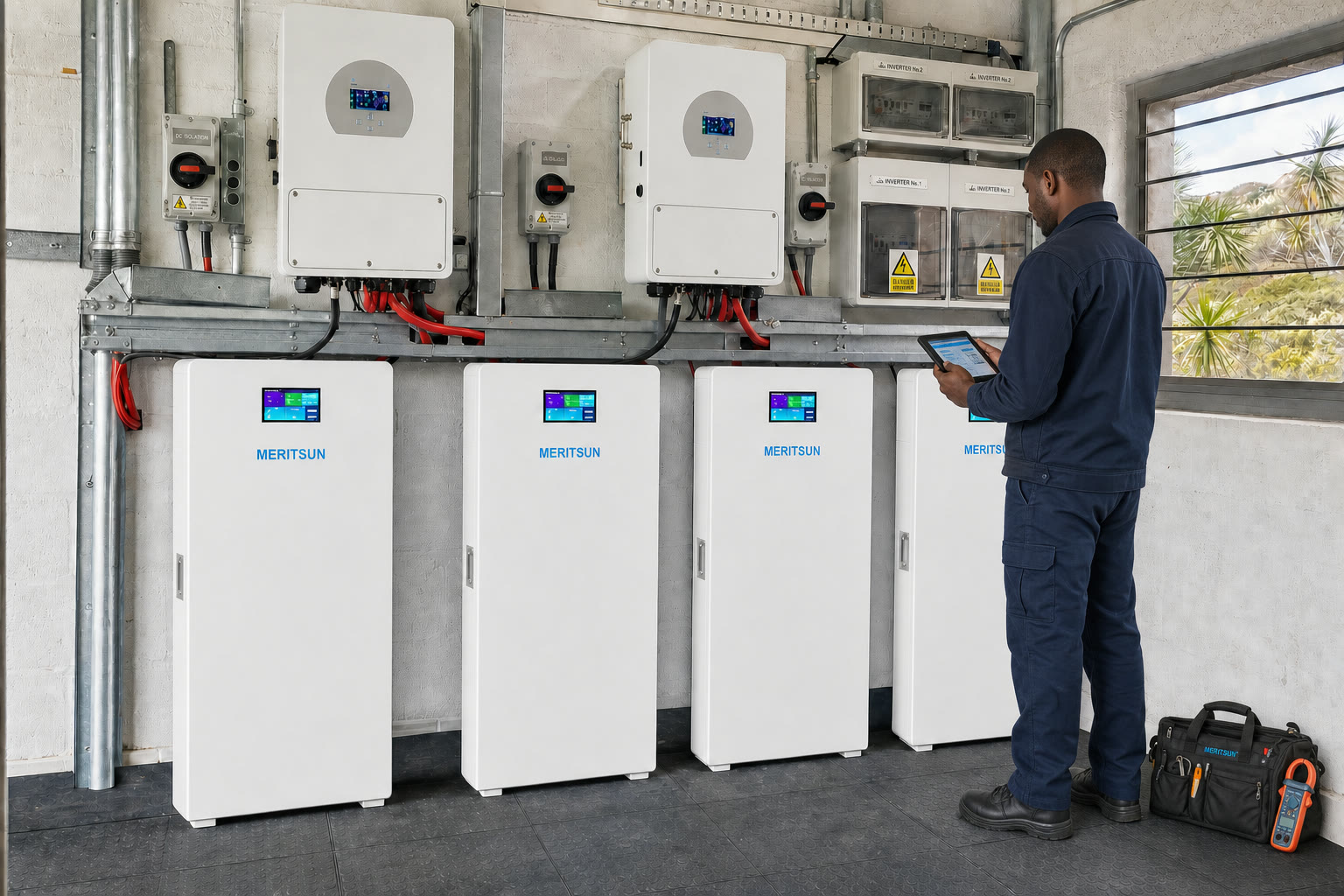
The four batteries were placed in a straight row beneath the inverter and protection equipment. This keeps the touchscreens at a readable height and gives the technician a clear view of every module during commissioning. The inverters, DC isolators and distribution boxes are grouped above the battery bank, while galvanized cable tray carries the DC power and communication wiring.
The room is functional rather than decorative. Painted block walls, surface conduit, labeled enclosures and a durable non-slip floor are typical of a real service environment. These ordinary details matter: a battery system must remain understandable to the next technician who enters the room, not only to the team that installed it.
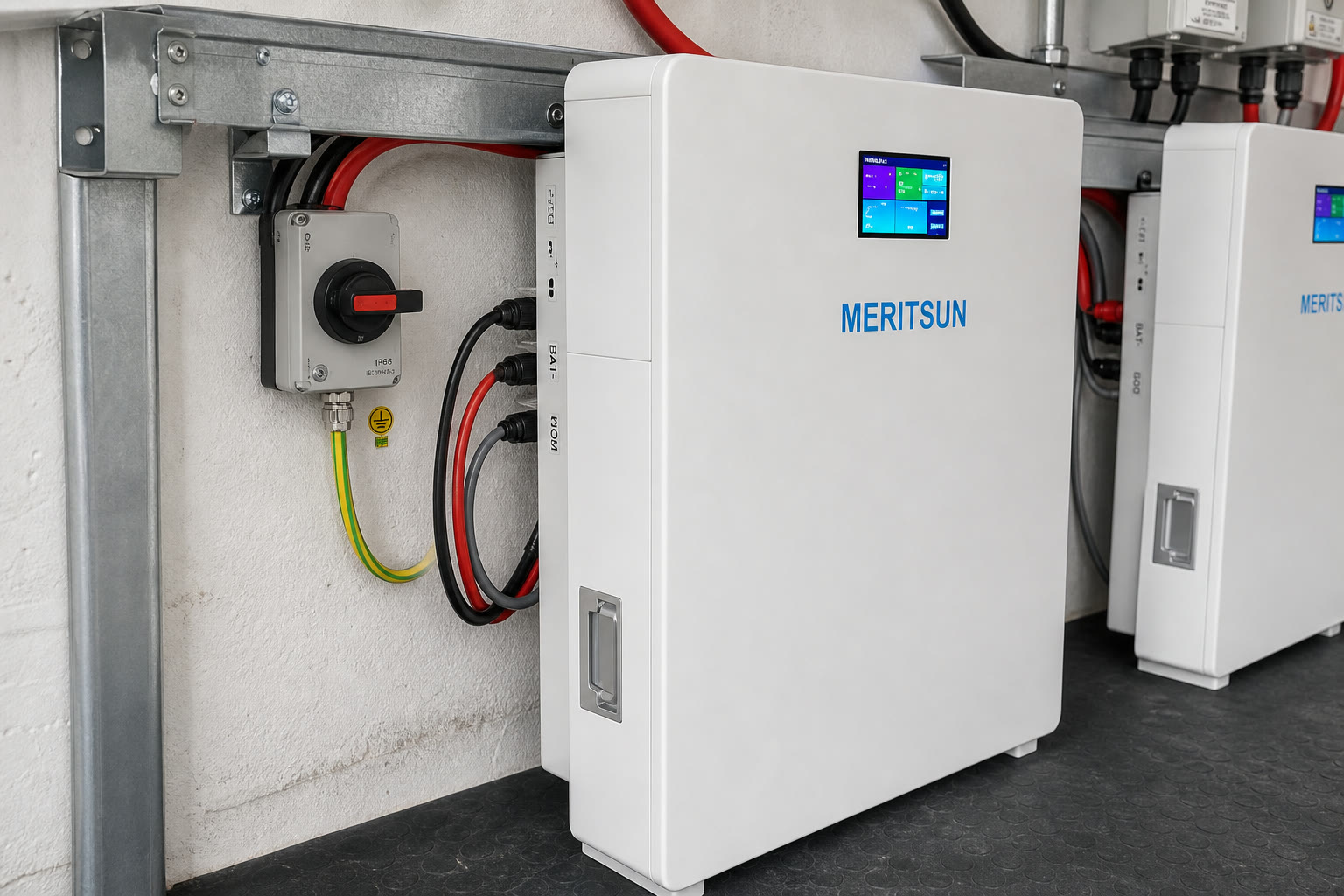
Adequate spacing, protected cable entries and unobstructed working clearances support safer inspection and future maintenance. The slim side profile also leaves more usable aisle space than a deep cabinet arrangement would require.
Touchscreen Monitoring at Every Battery
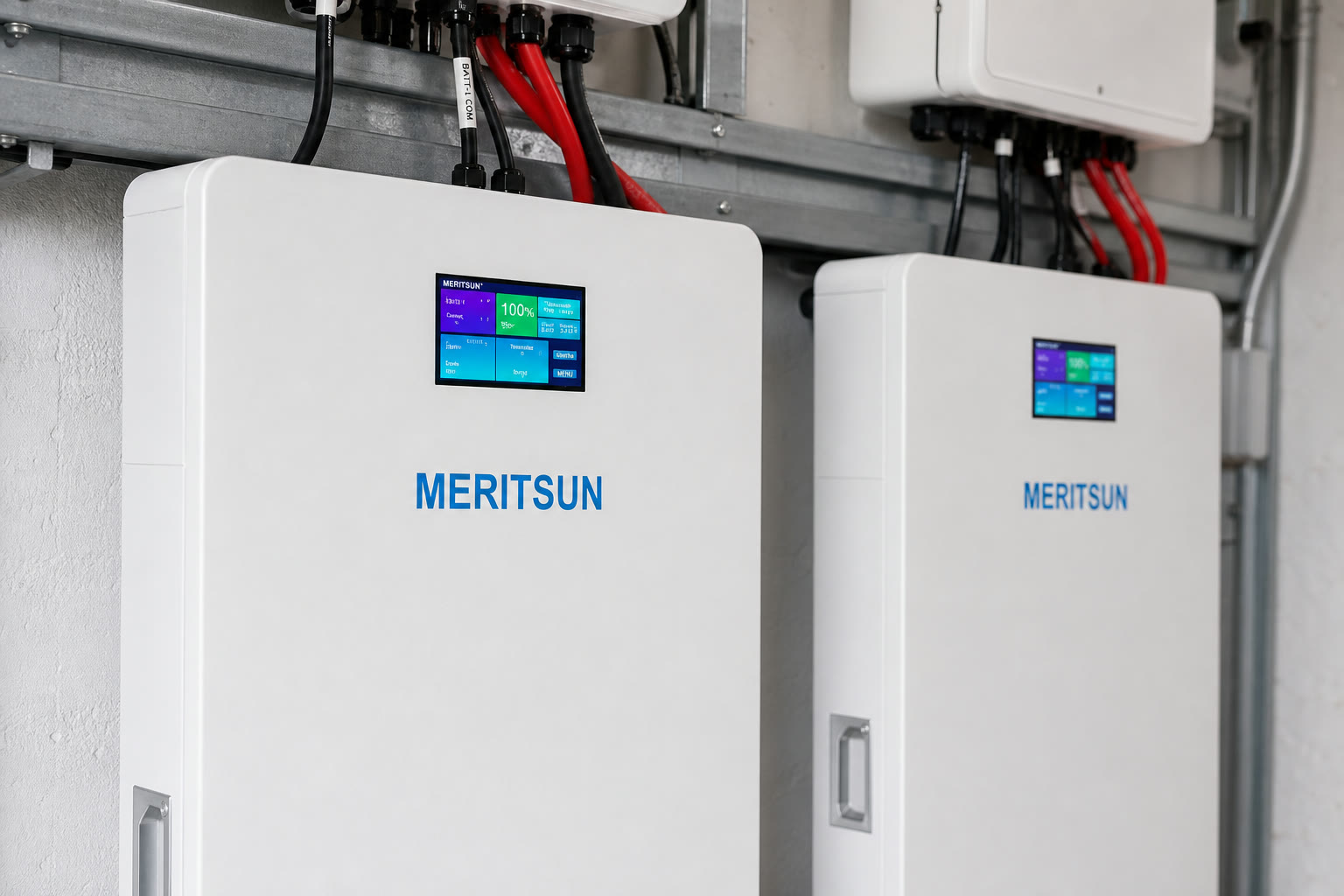
Each battery's illuminated full-color display provides a local view of operating status. During commissioning, the screens help the installer confirm that every module is powered and responding. The integrated BMS monitors battery conditions and communicates with the compatible inverter control system.
The commissioning checklist for a four-module bank should include:
- checking module voltage before making the parallel connection;
- confirming cable polarity, conductor size, terminal torque and protective devices;
- assigning communication addresses and confirming the battery protocol;
- verifying charge current, discharge current and state-of-charge limits;
- testing isolators and the emergency shutdown sequence;
- applying a controlled load to confirm normal response;
- confirming that the customer-facing monitoring view matches local battery status.
Local screens are valuable during service because a technician can compare module status without relying only on a remote portal or internet connection.
Essential Loads for a Small Guesthouse
The backup plan prioritizes operations that directly affect guest safety and basic service continuity. Typical essential circuits can include reception and booking equipment, Wi-Fi and communications, security systems, selected lighting, refrigeration, selected water-pump loads, office computers and payment equipment.
Large electric water heaters, commercial cooking equipment, pool heating and high-demand air-conditioning should be evaluated separately. If these loads are included, the inverter power rating, surge requirements and desired runtime must be reviewed carefully. Load management can often deliver more useful backup time than simply increasing battery capacity.
Solar Self-Consumption Beyond Backup
Backup power is only one part of the business case. During normal operation, the battery system can capture surplus daytime PV energy and release it during the late afternoon and evening when guest demand remains high. This allows the property to use more of its own solar generation instead of exporting or curtailing it.
The operating schedule should be configured around the property's tariff, seasonal occupancy and solar production. A guesthouse with high evening occupancy may choose to reserve a defined state of charge for outages while using the remaining capacity for daily solar shifting.
Designed for the Cape Town Environment
The batteries are installed indoors, away from direct sun, rain and coastal weather. The louvered window and service-room layout support normal air movement while the equipment remains protected. Cable glands, enclosures and conduit are selected for the installation environment, and final placement must follow the product manuals and local requirements.
For sites near the coast, installers should also consider corrosion exposure, room humidity, dust, maintenance access and the condition of existing switchgear. Battery performance and life depend on correct electrical settings and a suitable operating environment as much as on cell chemistry.
Value for Installers, EPCs and Hospitality Projects
- Start with the property's measured load profile and operating priorities.
- Separate essential circuits from high-demand discretionary loads.
- Match battery energy with inverter power and PV production.
- Leave visible, serviceable cable routes and working clearances.
- Commission every battery module and document the final settings.
- Plan expansion points before the first installation is complete.
The Result: Compact Storage for Reliable Guest Operations
The completed 40kWh MERITSUN system gives the guesthouse a compact storage platform for solar self-consumption and essential-load backup. Four ultra-thin touchscreen batteries fit neatly below the inverter equipment, keep local status visible and preserve valuable service-room space.
For solar installers and distributors serving hospitality customers, this modular approach can be adapted to different occupancy levels, PV sizes and backup targets. MERITSUN's ultra-thin LiFePO4 battery platform combines a slim cabinet, full-color touchscreen, smart BMS and scalable parallel architecture for residential and light commercial projects.
Contact MERITSUN to discuss battery configuration, inverter compatibility and storage sizing for your next guesthouse, lodge or small hotel solar project.